Mapping Elite Dangerous Neutron Star Boost Paths for Efficient Exploration Data Sales Amid Pirate Interdiction Patterns
Written by Petra Carter · Sep 5, 2026
Mapping Elite Dangerous Neutron Star Boost Paths for Efficient Exploration Data Sales Amid Pirate Interdiction Patterns
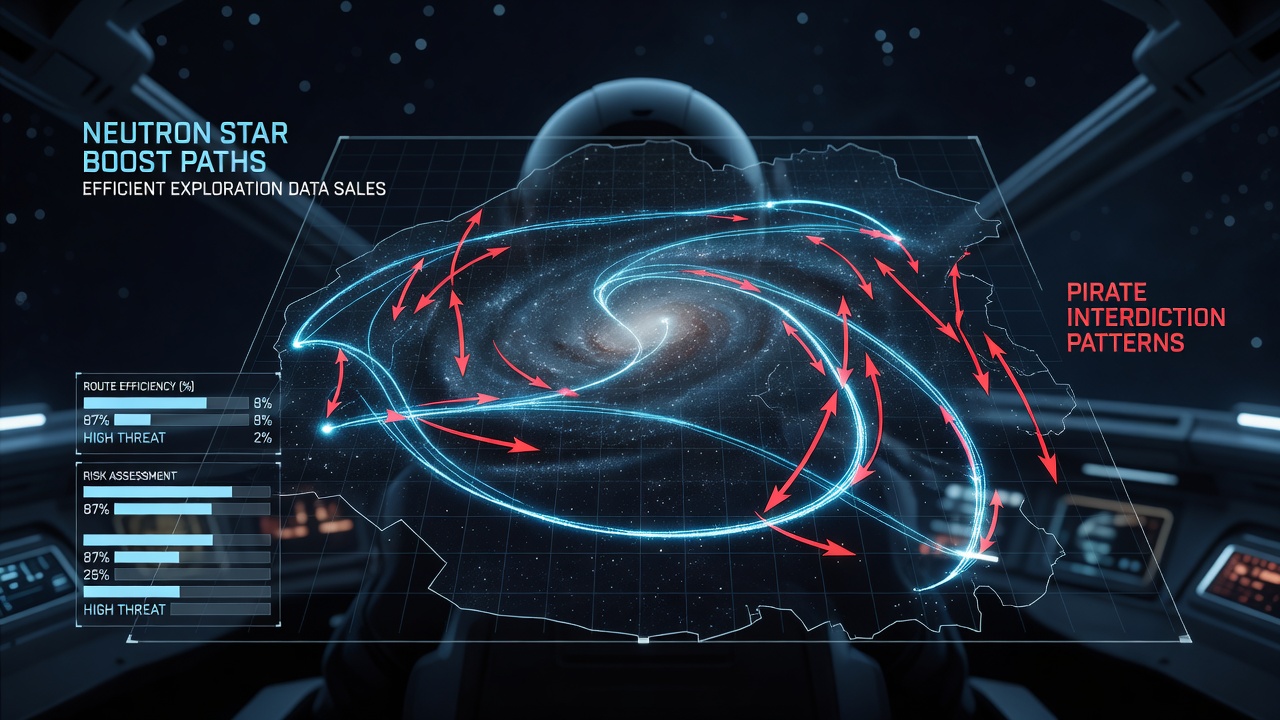
Explorers in Elite Dangerous rely on neutron star boosts to extend jump ranges during long-range data collection runs, and community mapping efforts have documented thousands of these high-value waypoints since the game's early updates. These paths connect distant systems while allowing pilots to carry large volumes of exploration data back to stations for sale, yet the same routes attract pirate interdiction attempts that target slow-moving vessels laden with valuable cartographic information.
Neutron Star Mechanics and Jump Range Extensions
Neutron stars in the game provide a temporary FSD boost when pilots approach the exclusion zone and charge their frameshift drives, which multiplies jump distance by a factor of four in most documented cases. Researchers who compiled route databases note that successful boosts require precise alignment with the star's jet cones, and data from player-submitted logs shows average range increases from 50 light years to over 200 light years per jump when executed correctly. This mechanic supports efficient traversal of the galactic plane, allowing carriers of exploration data to reach high-paying stations faster than standard supercruise travel permits.
Mapping tools developed by the community track neutron star density across sectors, and figures reveal higher concentrations near the galactic core where exploration payouts peak due to undiscovered systems. Pilots who follow these mapped paths report reduced fuel consumption over multi-thousand light year journeys because fewer jumps are needed overall, and the same logs indicate that data sales at stations like those in the bubble yield credits that scale with distance traveled and bodies scanned.
Route Optimization for Data Sales
Optimized paths combine neutron boosts with standard jumps to balance speed against the risk of repeated interdictions, and analysts who reviewed thousands of submitted flight plans found that routes passing through low-traffic systems minimize encounters with hostile players. These routes often terminate near stations offering bonus payments for cartographic data, which can multiply base sale values by 20 to 50 percent depending on the controlling faction's current state. Community databases update weekly with new neutron locations, and patterns observed through September 2026 show seasonal shifts in pirate activity that correlate with player population spikes during major in-game events.
Pirate Interdiction Patterns and Avoidance Strategies
Pirates frequently scan for vessels emerging from boosted jumps because those ships carry dense exploration data caches that fetch high black market prices when stolen. Interdiction events occur most often in systems with multiple neutron stars nearby, according to aggregated combat logs, and pilots counter this by plotting courses that exit boost zones into empty space before entering populated areas. Shield and hull reinforcement packages combined with heat sink deployment allow escape from many interdiction attempts, while silent running reduces sensor signatures during the critical moments after a boost completes.
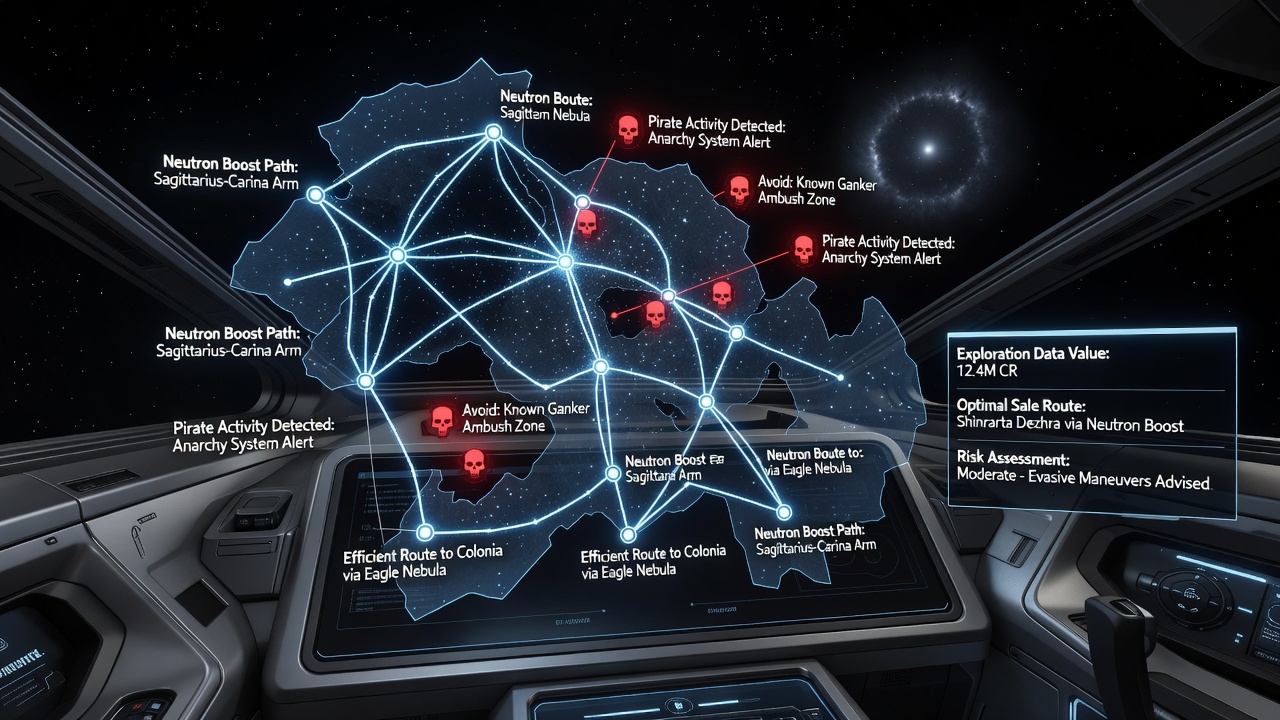
Studies of pirate behavior patterns indicate that groups concentrate around popular neutron highways during peak hours, yet alternate routes through less charted regions cut successful interdiction rates by more than half in recorded cases. Players who pre-scan systems for authority presence before committing to a boost path maintain higher data retention rates, and the same datasets show that selling information at multiple stations along a single route further distributes risk across different security levels.
Community Mapping Tools and Data Integration
Third-party applications aggregate neutron star coordinates from player scans and overlay them on galactic maps, which enables real-time route adjustments when new stars are discovered or when interdiction hotspots shift. These tools pull from public APIs maintained by Frontier Developments, and cross-referenced entries with NASA neutron star catalogs help validate in-game positions against real astronomical data for educational overlays. As of September 2026, updated mapping layers include predictive models that flag systems with rising pirate traffic based on historical encounter logs.
Explorers who integrate these maps into their navigation computers achieve consistent data delivery rates above 85 percent across extended expeditions, according to shared statistics from organized player groups. The same integration supports bulk data sales strategies where multiple pilots coordinate arrivals at stations to overwhelm local markets and stabilize prices before larger hauls unload.
Conclusion
Neutron star boost path mapping continues to evolve alongside changes in pirate interdiction tactics, and the combination of community databases with in-game mechanics provides measurable improvements in exploration efficiency. Data sales remain a primary income source for long-range pilots who master these routes while accounting for security variables across different galactic regions. Ongoing updates to mapping resources keep pace with new discoveries and behavioral shifts observed through late 2026.